Exceptional 18th Century Tinderbox Pistol in untouched original condition. Outstanding patina to the Walnut stock and the steel. Everything is tight and in working condition with leather and flint. Circa 1760-80
The Flintlock Tinder Lighter was a logical evolution of the conventional flint & steel method that had been used to start fires for hundreds of years. While research and documentation regarding mechanical tinder lighters is scarce at best, it appears that the small, pistol shaped flintlock lighters first appeared during the first quarter of the 18th century and gained popularity by the middle of the 1700s. It remains unclear if the majority of these lighters were made by gunsmiths or other craftsmen, but it seems reasonable to assume that most were not produced by arms makers, as the crudeness of the mechanisms encountered do not imply a gunsmith’s skill. Most are somewhat boxy affairs, usually with an exposed mechanism, but some of French origin do utilize an internal box lock action. In general, the tinder lighters worked much like a pistol, with cock that held a flint and struck a frizzen when the trigger was pulled. The resulting sparks, generated as the flint scraped along the steel frizzen, fell into a pan that held tinder rather than gunpowder. The hope was that the shower of sparks would ignite the tinder producing at least enough smoldering heat to light a punk, candle or small stick, allowing a larger fire to be lit. Most of the tinder lighters of the mid-to-late 18th century included some small storage section where the tinder, often tow, flax or even char cloth, could be stored. As the Flintlock Tinder Lighter evolved, many started to incorporate a small candle holder on the side of the lighter, making it easier to keep all the necessary parts together, and realistically creating the original “flashlight”. By striking your tinder lighter and lighting your candle, you now had a mobile light device, with the ignition system and candleholder all in one. Most tinder lighters appear to have been produced in England, France and the Germanic states. It is usually difficult to assess exact origin
Exceptional 18th Century Tinderbox Pistol in untouched original condition. Outstanding patina to the Walnut stock and the steel. Everything is tight and in working condition with leather and flint. Circa 1760-80
The Flintlock Tinder Lighter was a logical evolution of the conventional flint & steel method that had been used to start fires for hundreds of years. While research and documentation regarding mechanical tinder lighters is scarce at best, it appears that the small, pistol shaped flintlock lighters first appeared during the first quarter of the 18th century and gained popularity by the middle of the 1700s. It remains unclear if the majority of these lighters were made by gunsmiths or other craftsmen, but it seems reasonable to assume that most were not produced by arms makers, as the crudeness of the mechanisms encountered do not imply a gunsmith’s skill. Most are somewhat boxy affairs, usually with an exposed mechanism, but some of French origin do utilize an internal box lock action. In general, the tinder lighters worked much like a pistol, with cock that held a flint and struck a frizzen when the trigger was pulled. The resulting sparks, generated as the flint scraped along the steel frizzen, fell into a pan that held tinder rather than gunpowder. The hope was that the shower of sparks would ignite the tinder producing at least enough smoldering heat to light a punk, candle or small stick, allowing a larger fire to be lit. Most of the tinder lighters of the mid-to-late 18th century included some small storage section where the tinder, often tow, flax or even char cloth, could be stored. As the Flintlock Tinder Lighter evolved, many started to incorporate a small candle holder on the side of the lighter, making it easier to keep all the necessary parts together, and realistically creating the original “flashlight”. By striking your tinder lighter and lighting your candle, you now had a mobile light device, with the ignition system and candleholder all in one. Most tinder lighters appear to have been produced in England, France and the Germanic states. It is usually difficult to assess exact origin
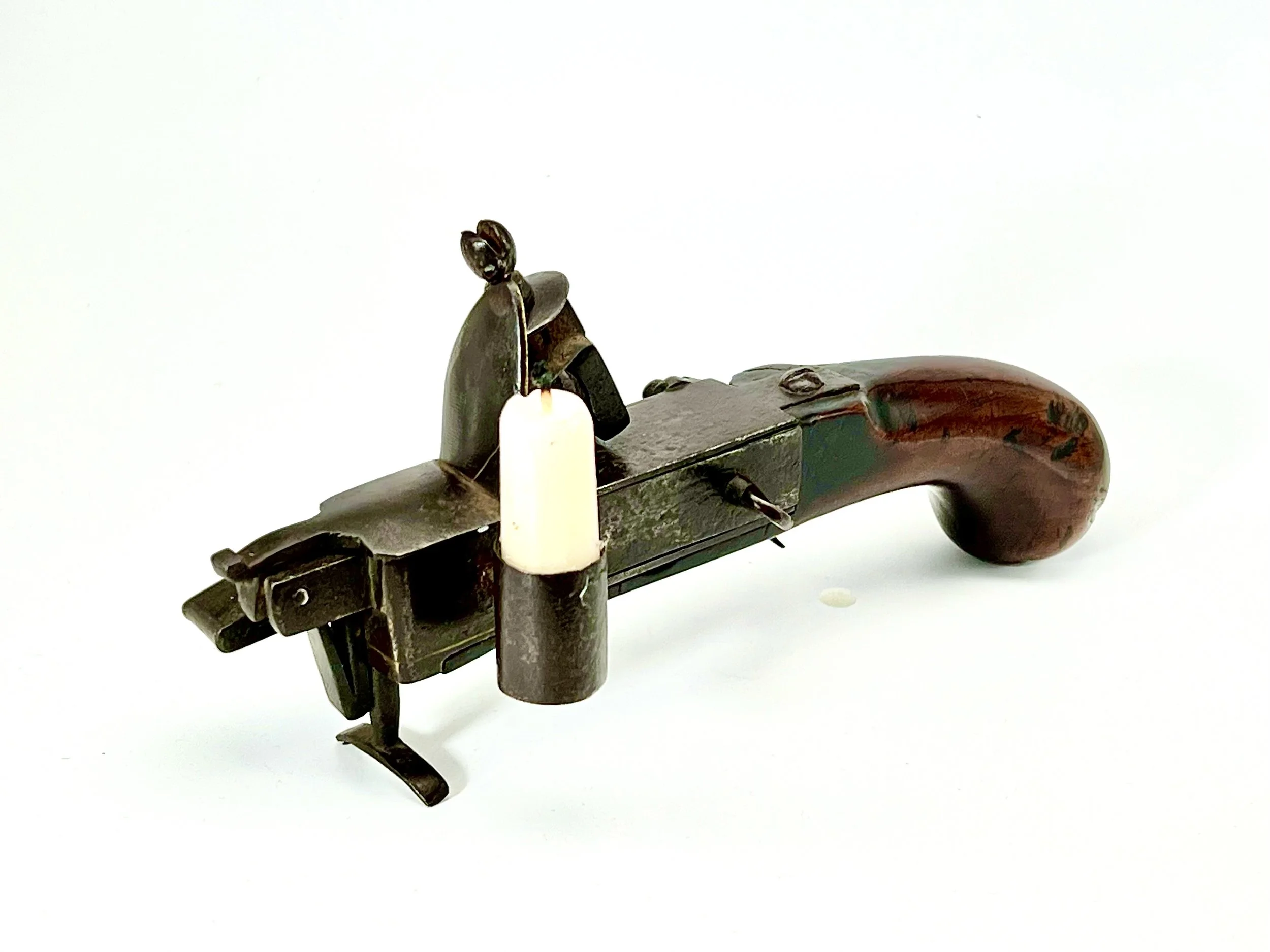 Image 1 of 9
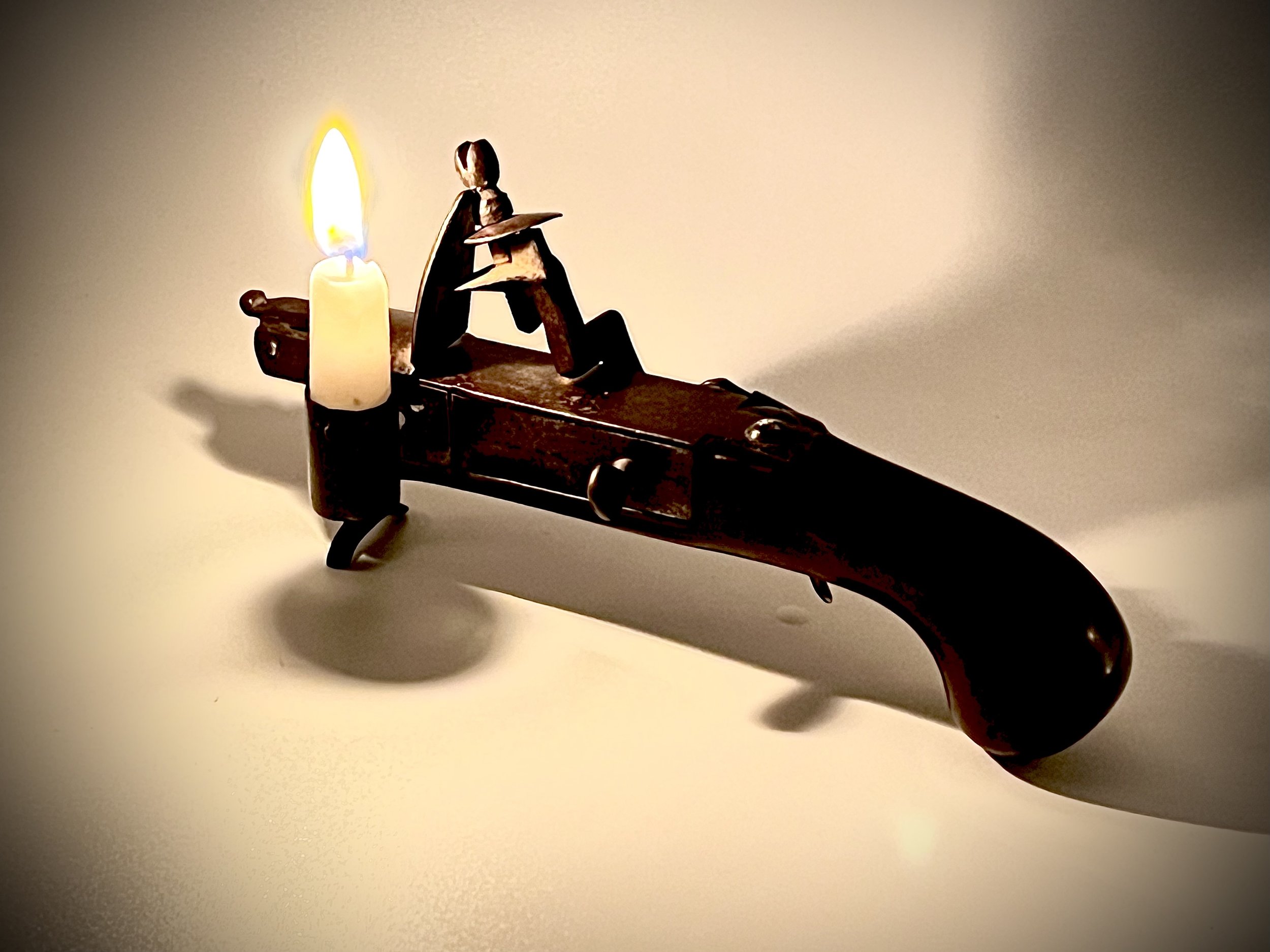 Image 2 of 9
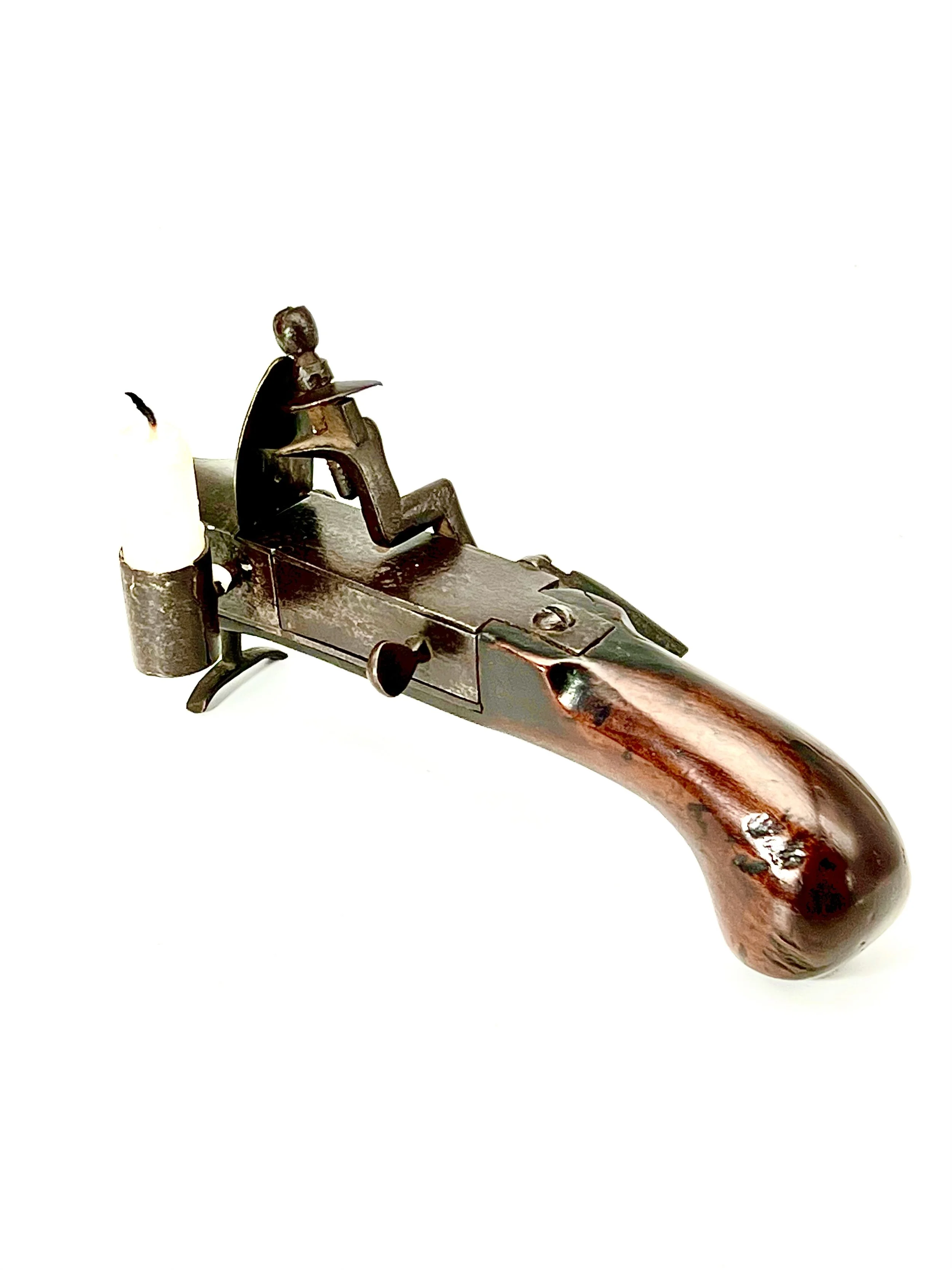 Image 3 of 9
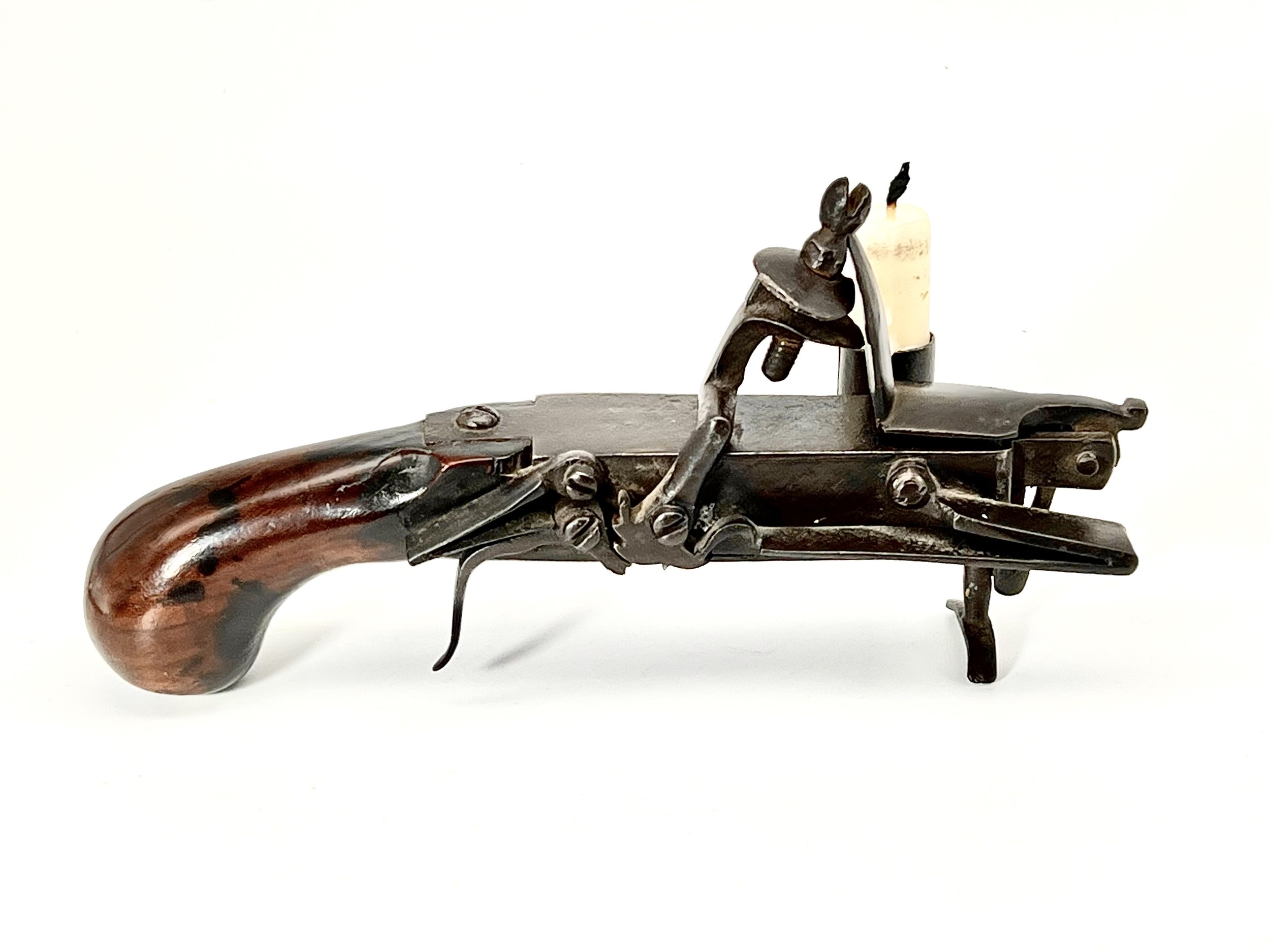 Image 4 of 9
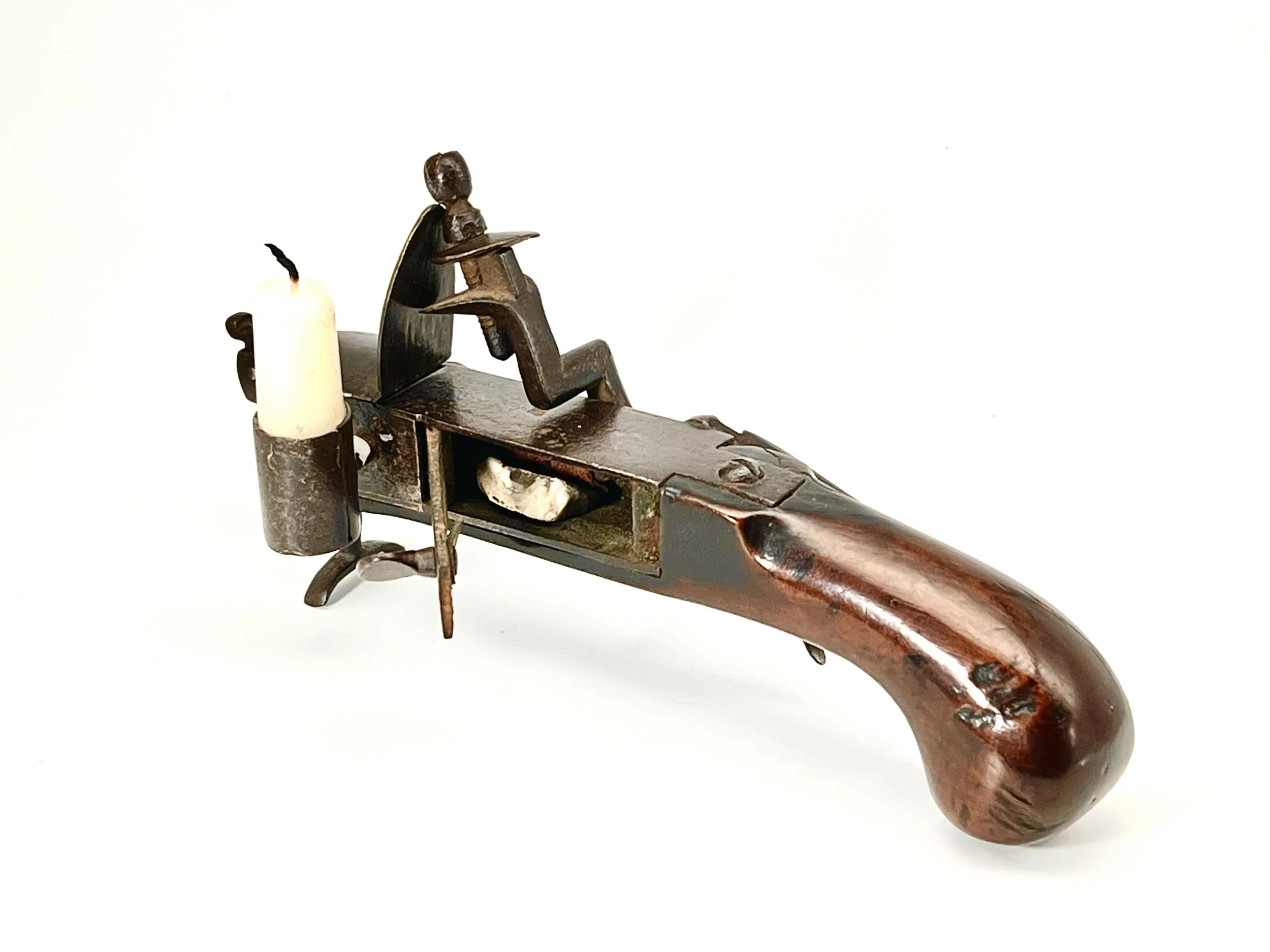 Image 5 of 9
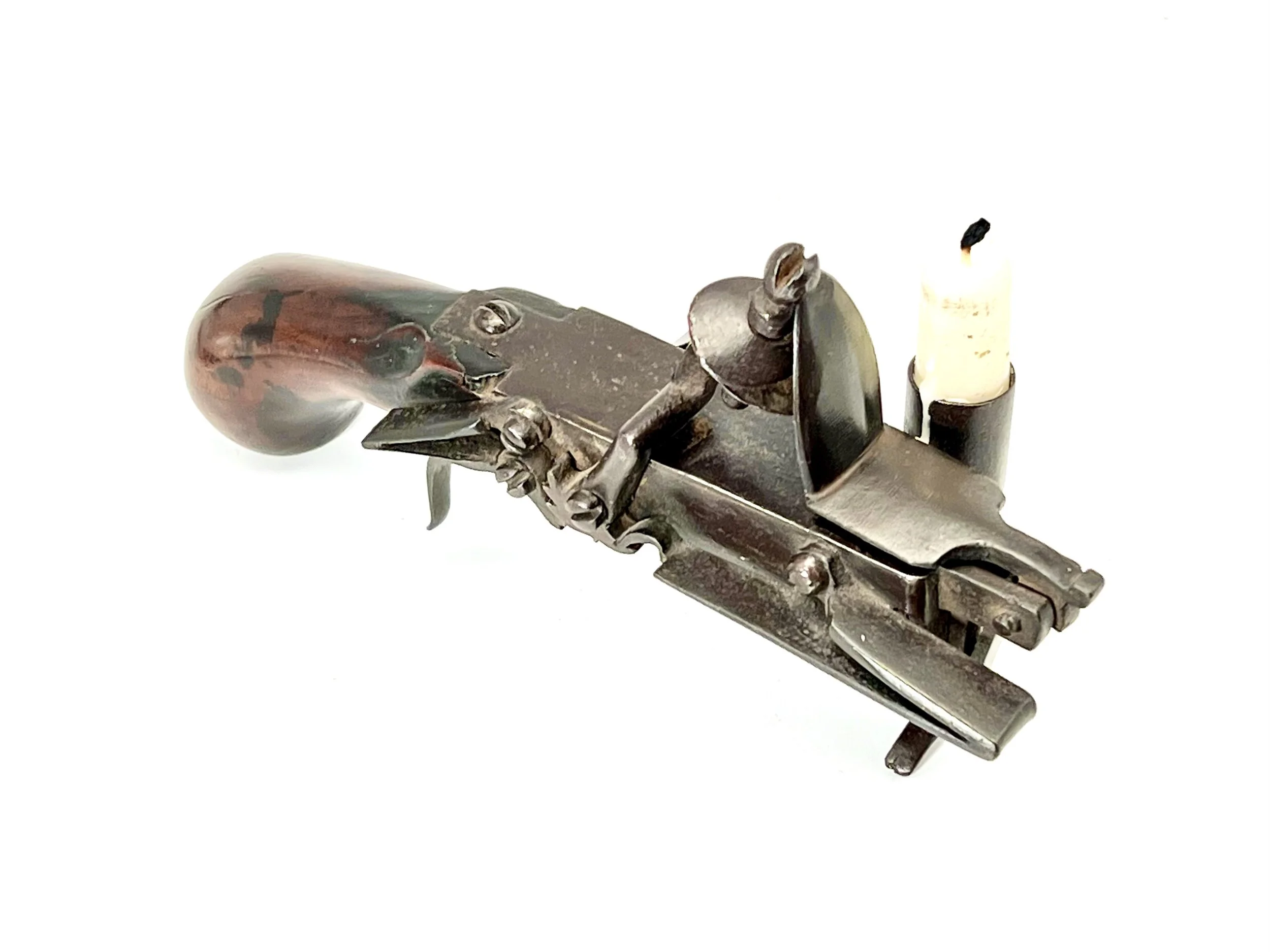 Image 6 of 9
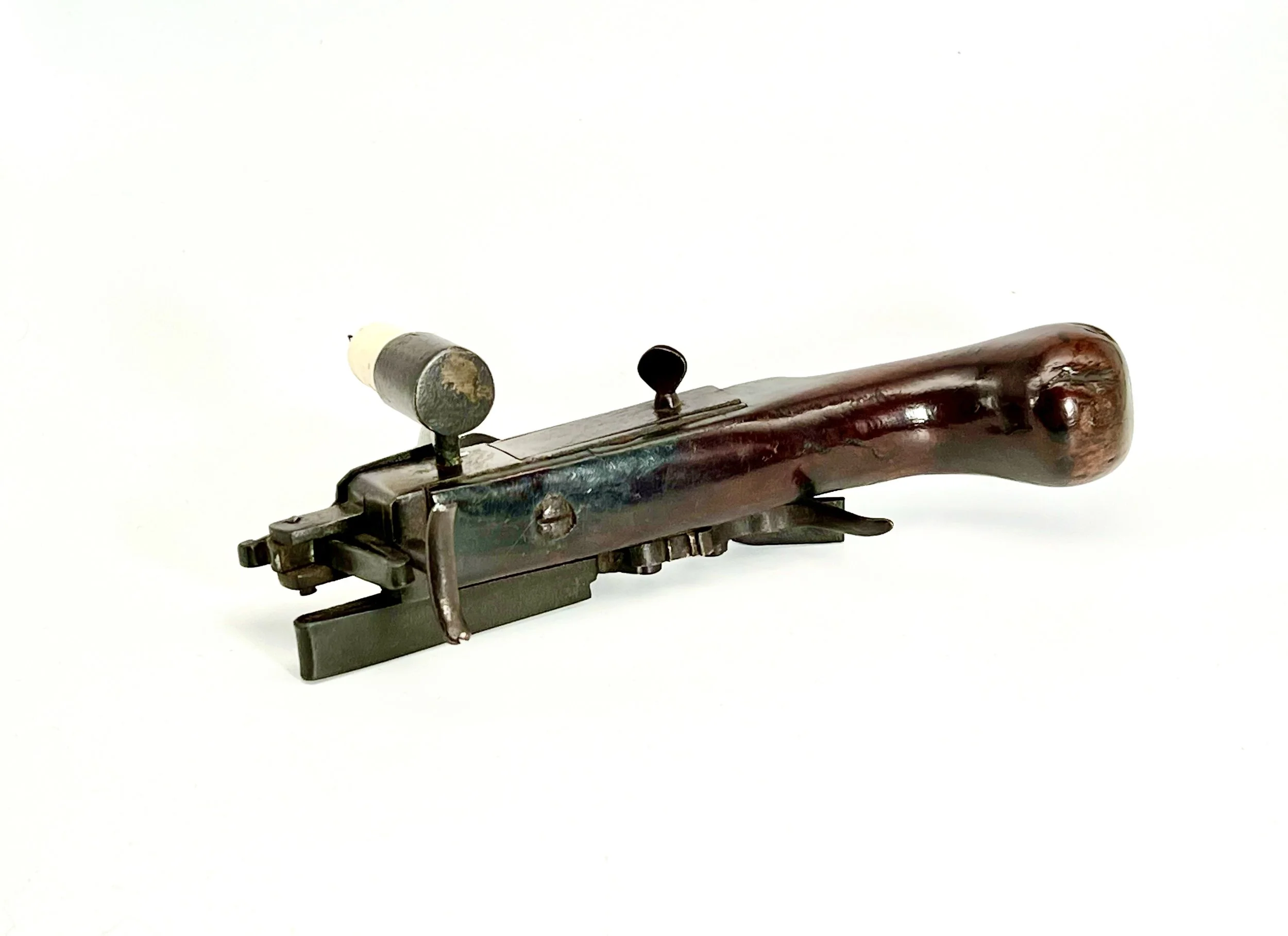 Image 7 of 9
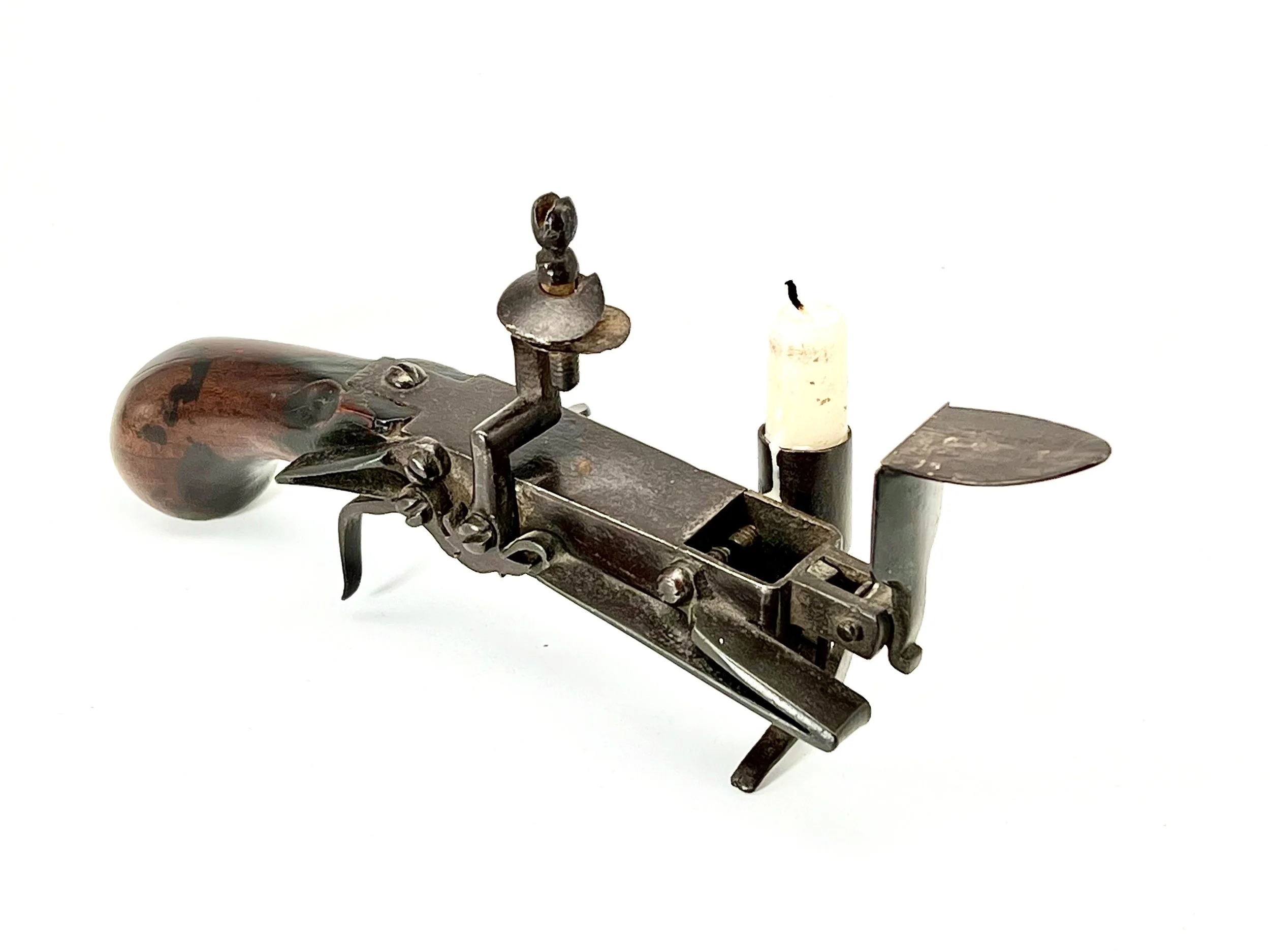 Image 8 of 9
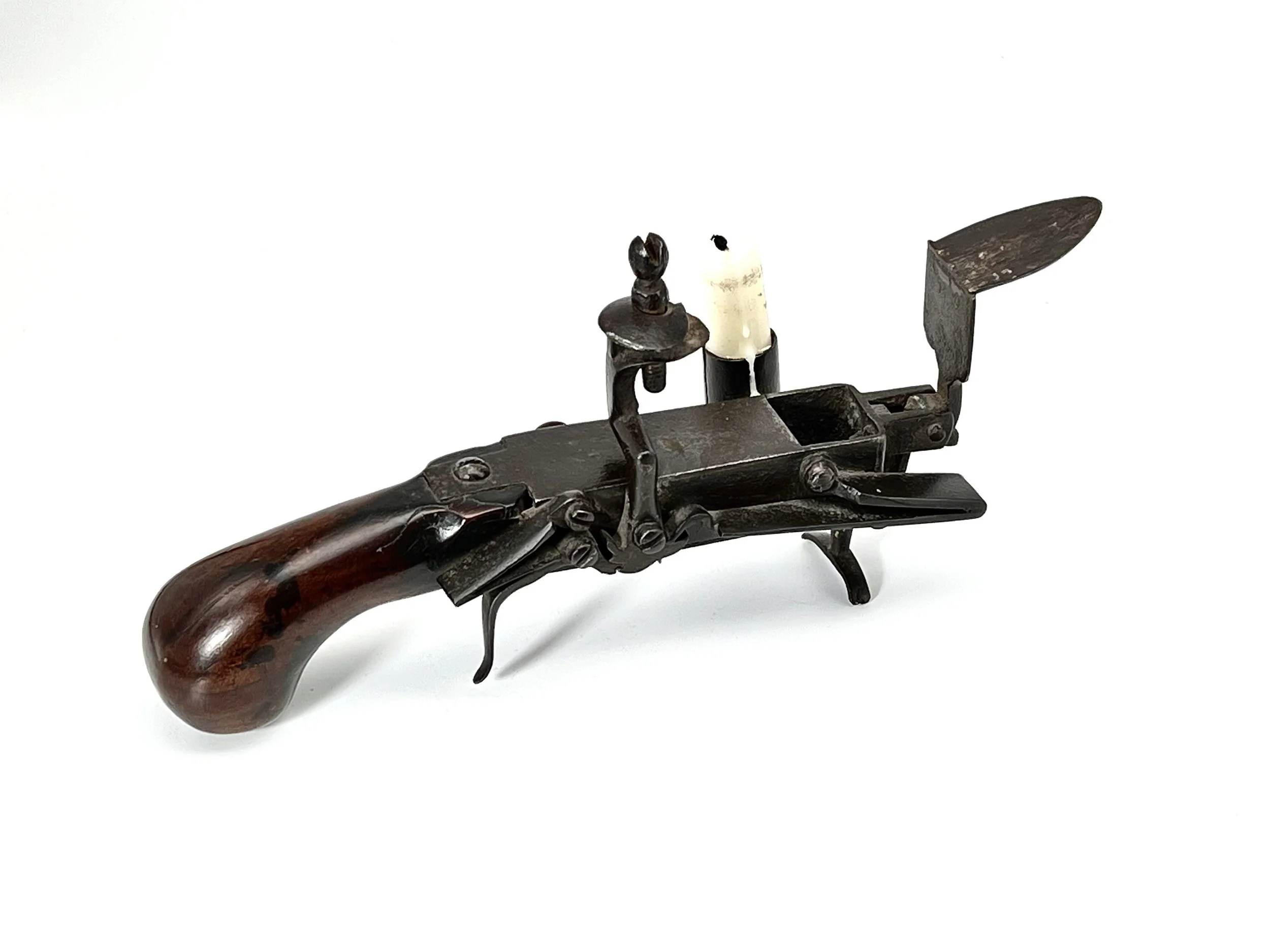 Image 9 of 9