Classic mahogany spiral staircase design with numerous small steps and turned baluster supports to the elegant curving railing, on a round base. This model is attributed to Maitland Smith, an American manufacturer and seller of high quality decorative furniture and accessories. In the late 20th Century, they offered many different styles of architectural staircase models; this classical spiral staircase was apparently their most popular among them.
Miniature staircases were produced by architects and furniture makers as fanciful projects (often as apprentices or students), primarily in the 19th and 20th centuries. They were also made for staircase manufacturers as models in designing or patenting proposed structures, as well as salesman’s samples. Extant forms include spiral staircases as well as curved and rectilinear ones. They are sometimes embellished with other decoration such as balusters and railings, and sometimes incorporated with or in elaborate structures, such as pulpits or domes. Some are simply constructed and utilitarian, others have fine detailed construction and carvings. Generally they are made from various hardwoods such as oak, walnut, or mahogany. Some examples are also made out of metal, typically iron or steel.
Classic mahogany spiral staircase design with numerous small steps and turned baluster supports to the elegant curving railing, on a round base. This model is attributed to Maitland Smith, an American manufacturer and seller of high quality decorative furniture and accessories. In the late 20th Century, they offered many different styles of architectural staircase models; this classical spiral staircase was apparently their most popular among them.
Miniature staircases were produced by architects and furniture makers as fanciful projects (often as apprentices or students), primarily in the 19th and 20th centuries. They were also made for staircase manufacturers as models in designing or patenting proposed structures, as well as salesman’s samples. Extant forms include spiral staircases as well as curved and rectilinear ones. They are sometimes embellished with other decoration such as balusters and railings, and sometimes incorporated with or in elaborate structures, such as pulpits or domes. Some are simply constructed and utilitarian, others have fine detailed construction and carvings. Generally they are made from various hardwoods such as oak, walnut, or mahogany. Some examples are also made out of metal, typically iron or steel.
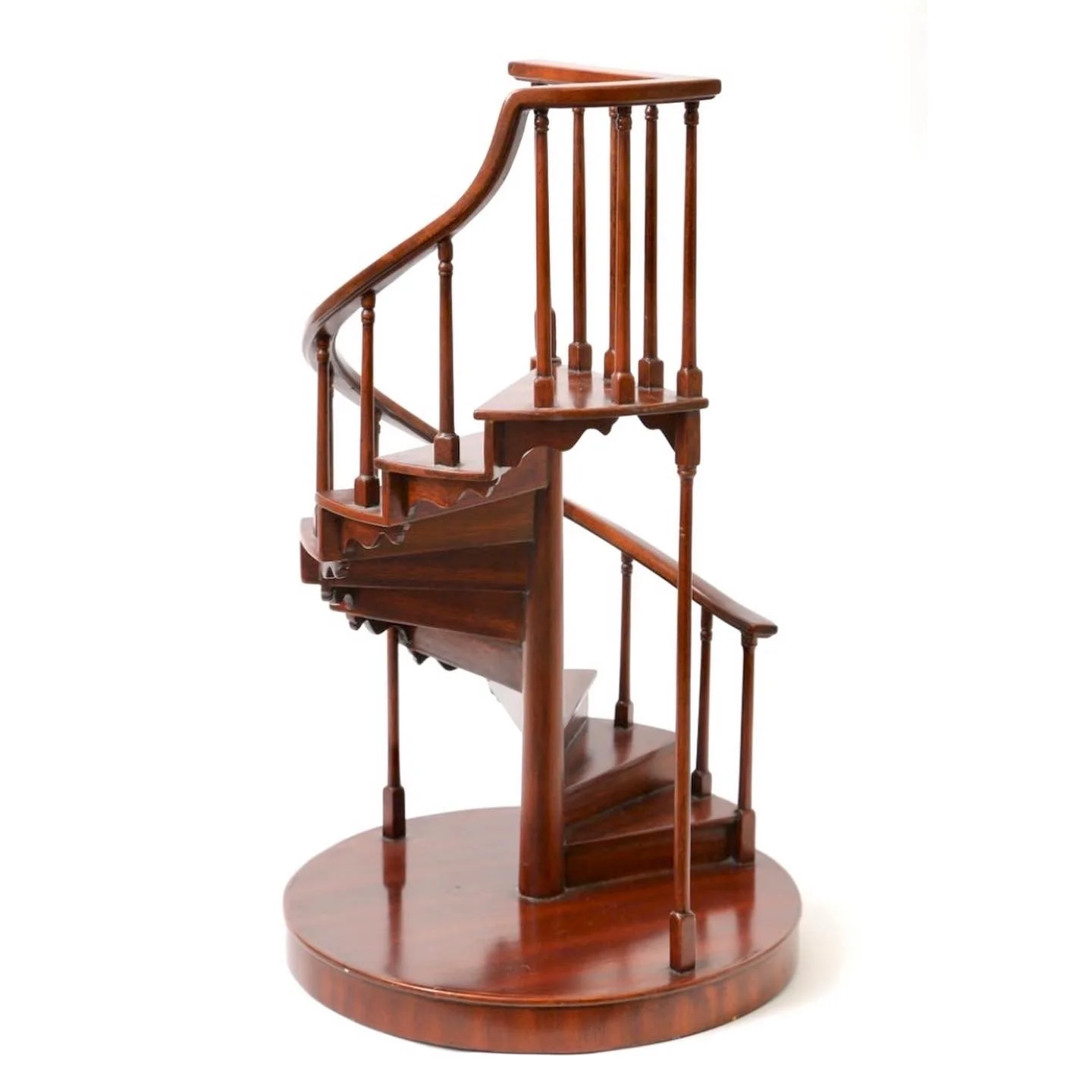 Image 1 of 6
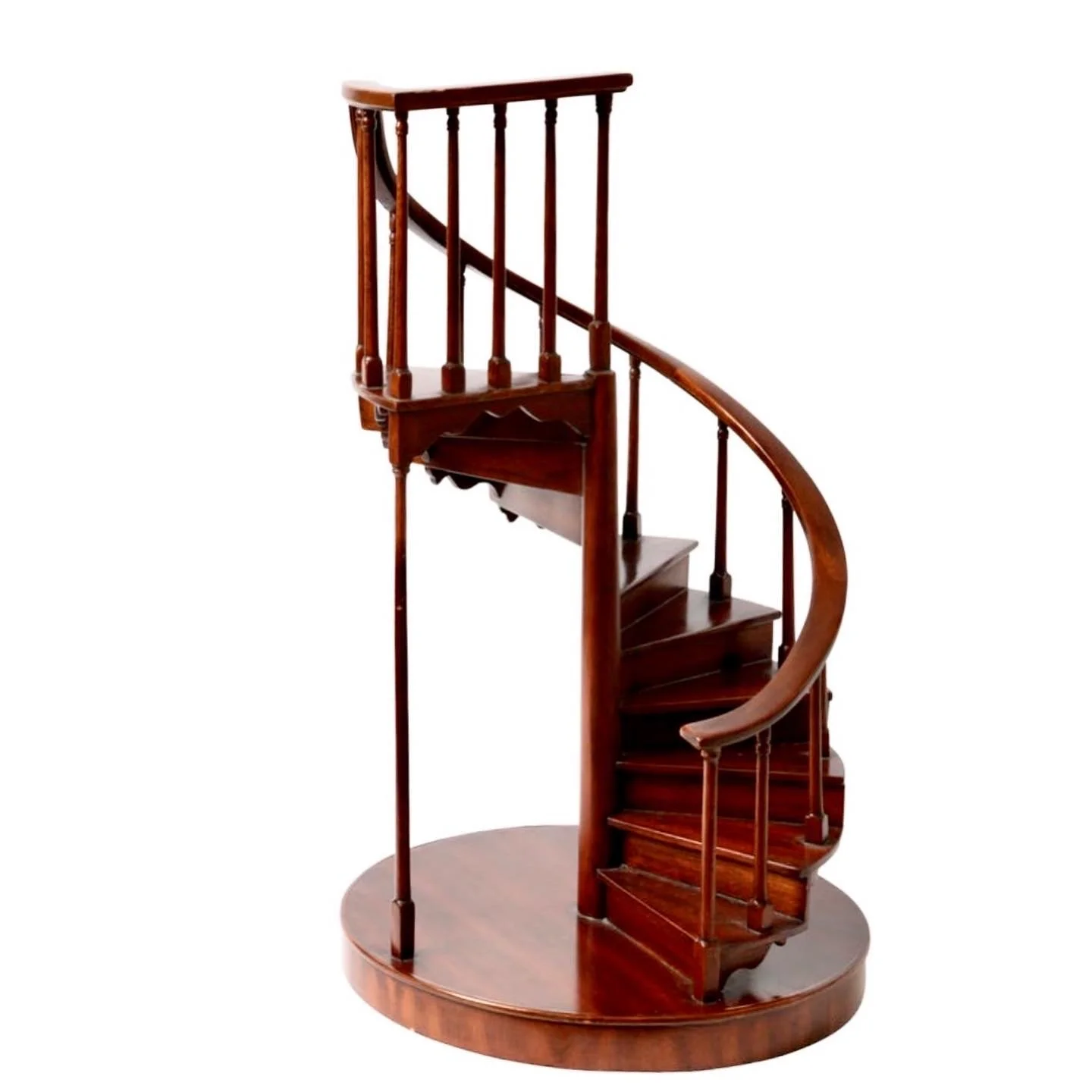 Image 2 of 6
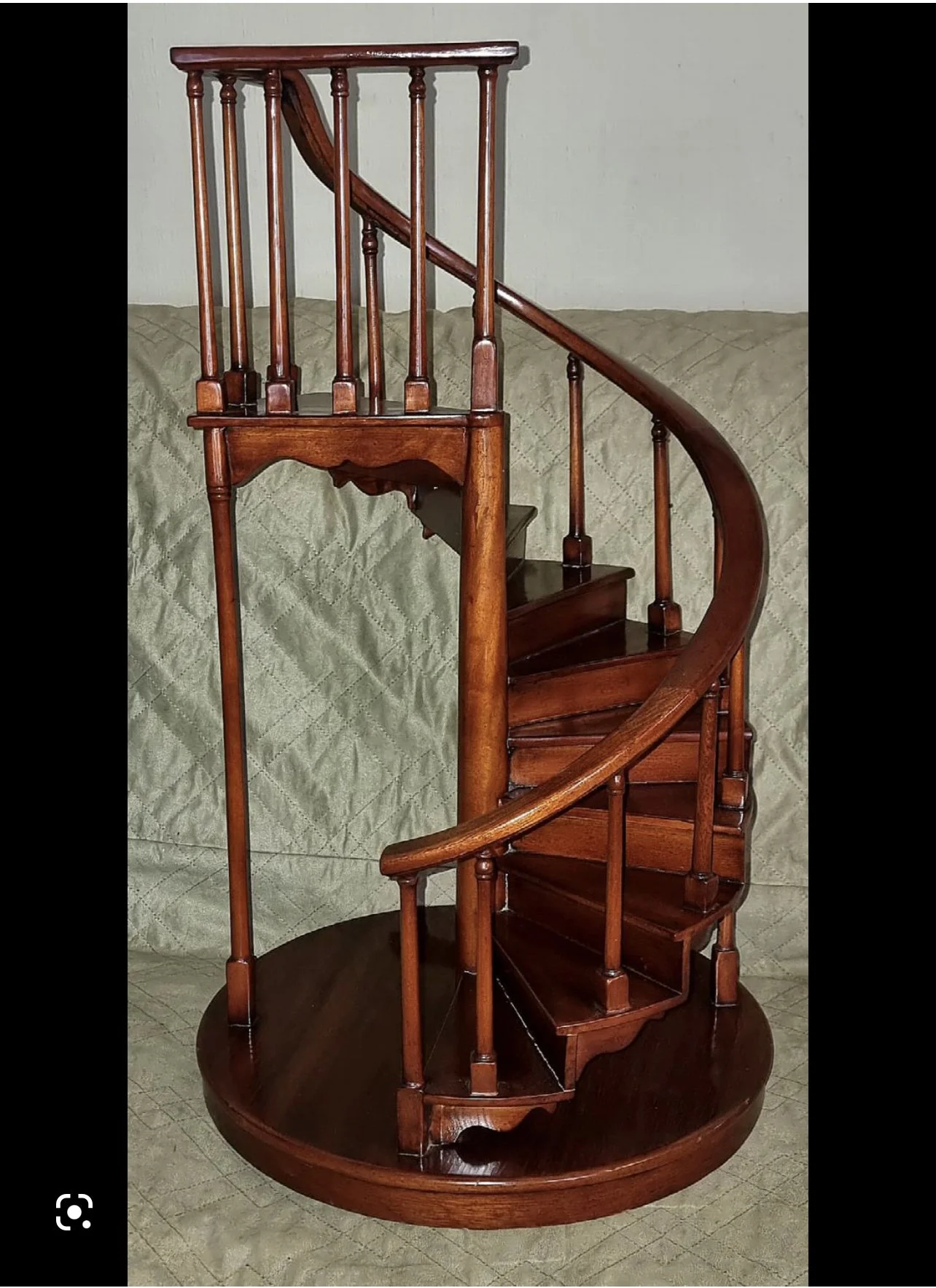 Image 3 of 6
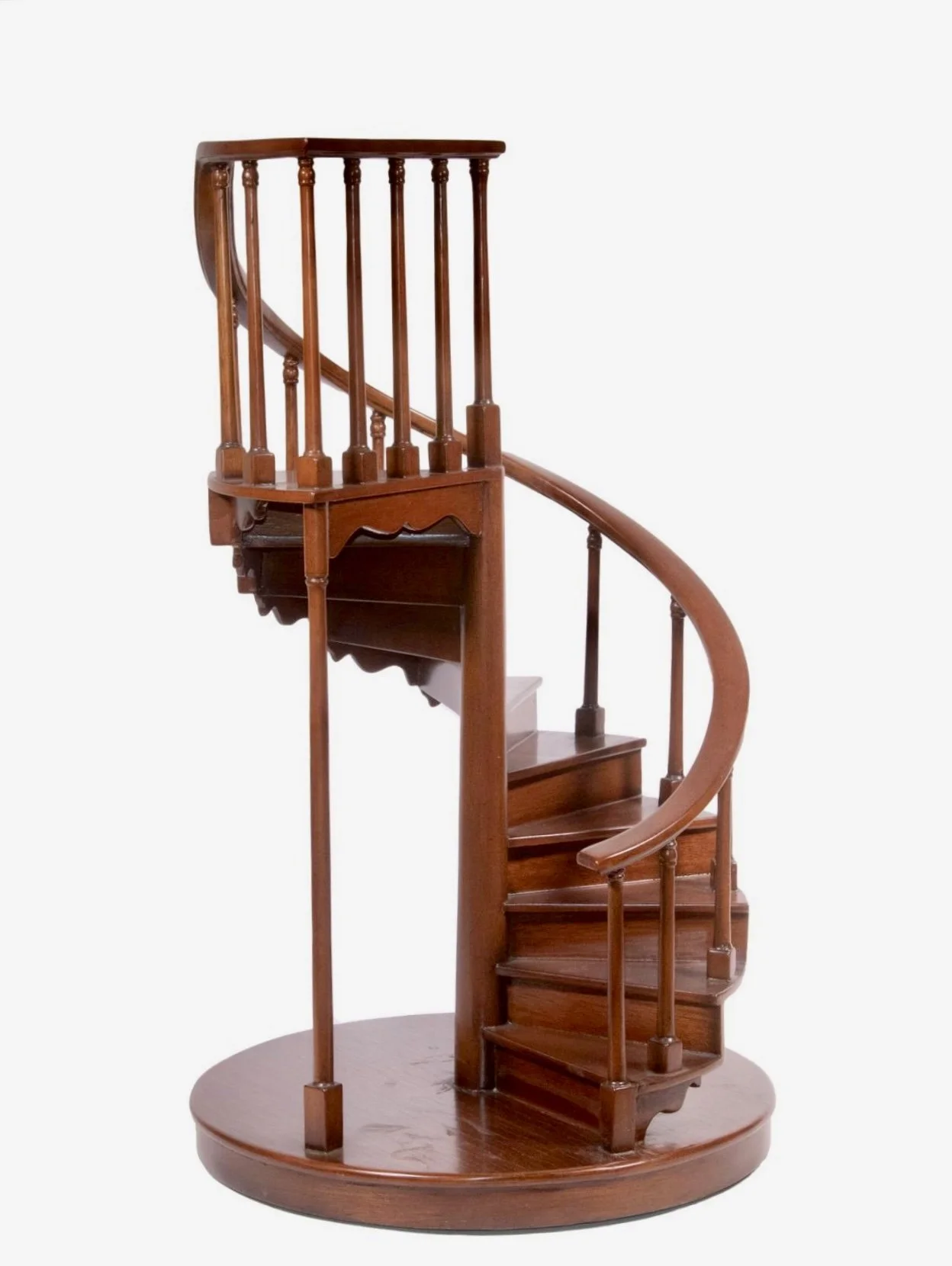 Image 4 of 6
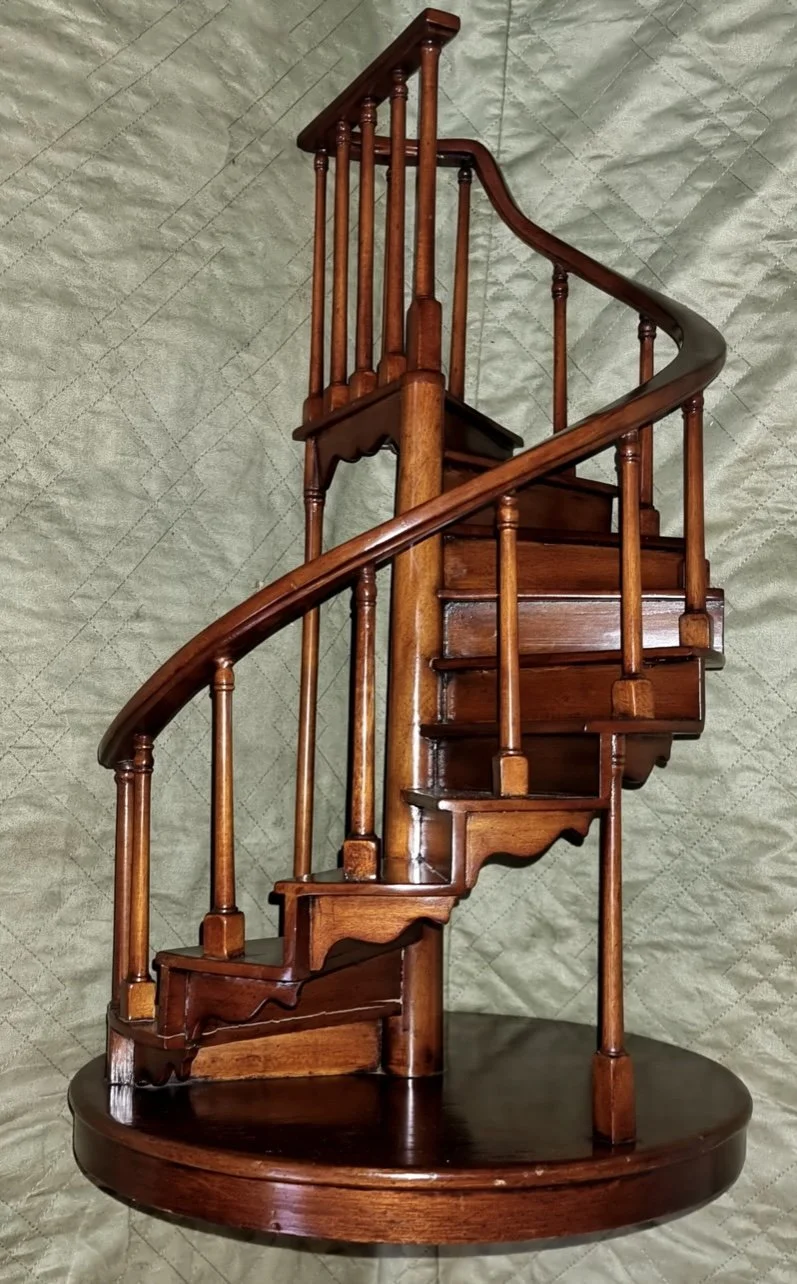 Image 5 of 6
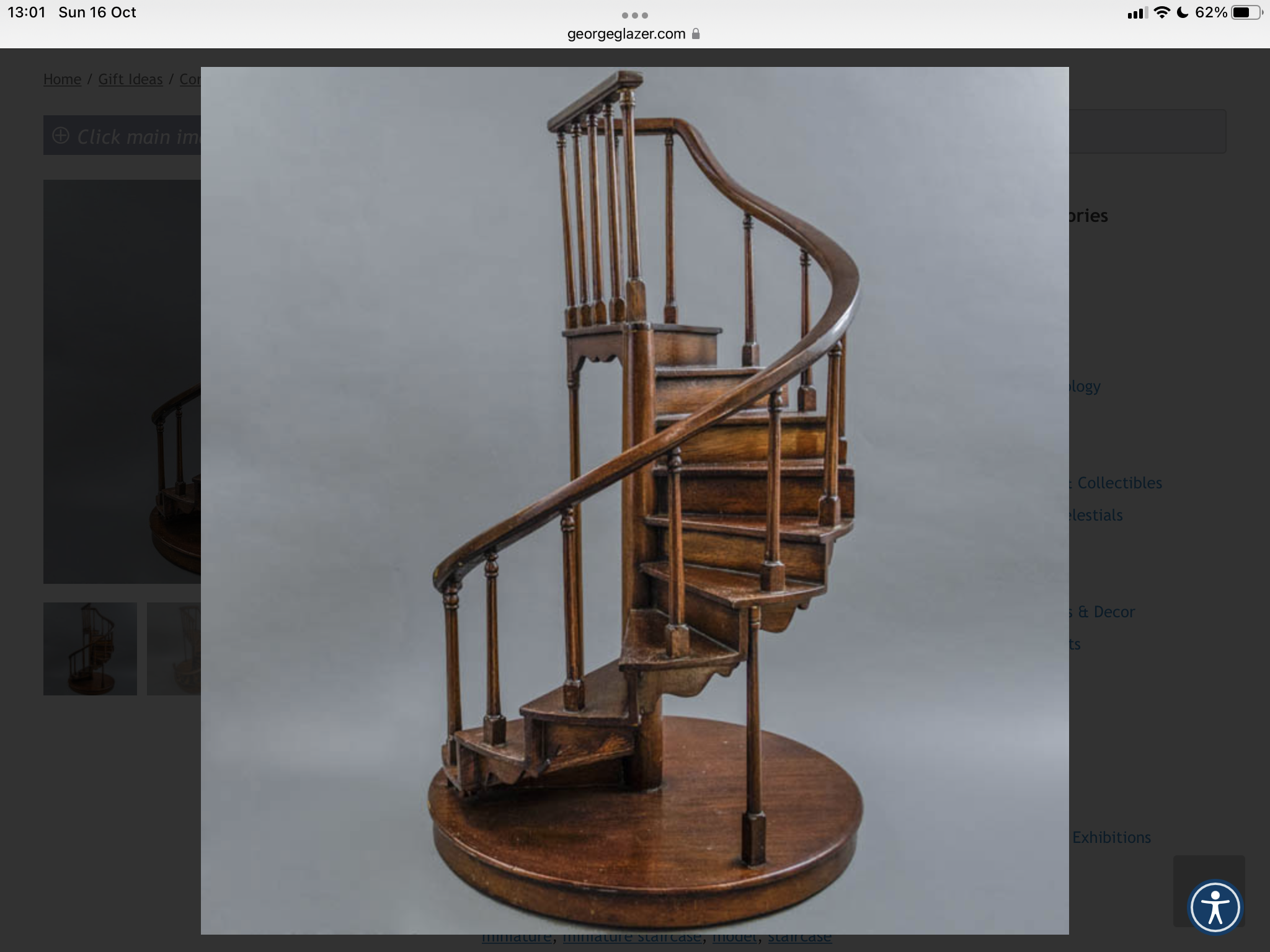 Image 6 of 6